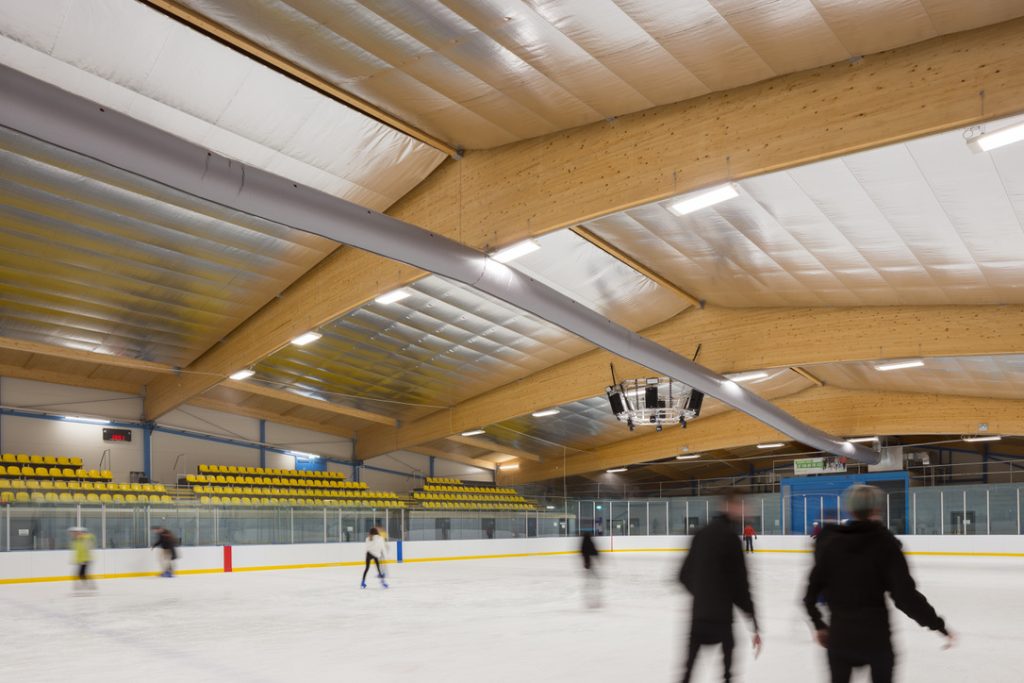
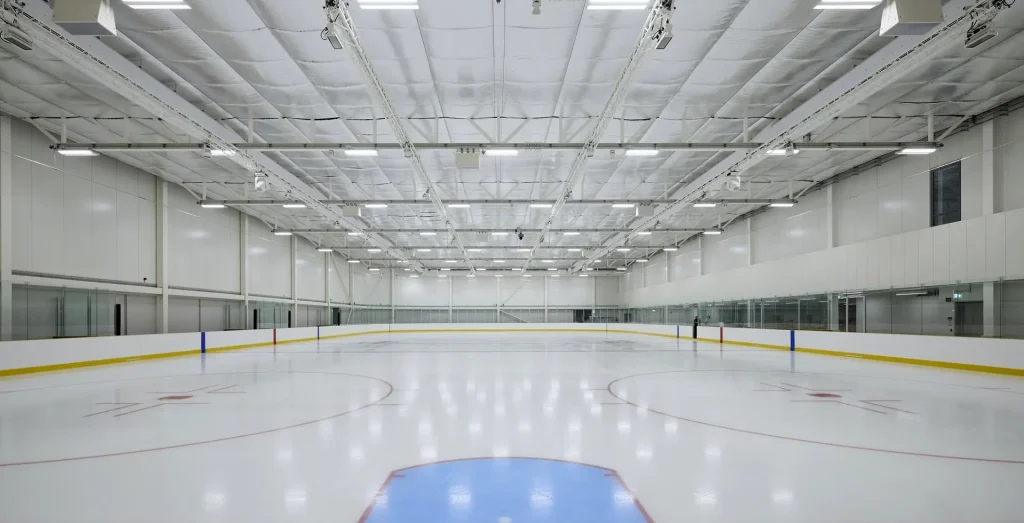
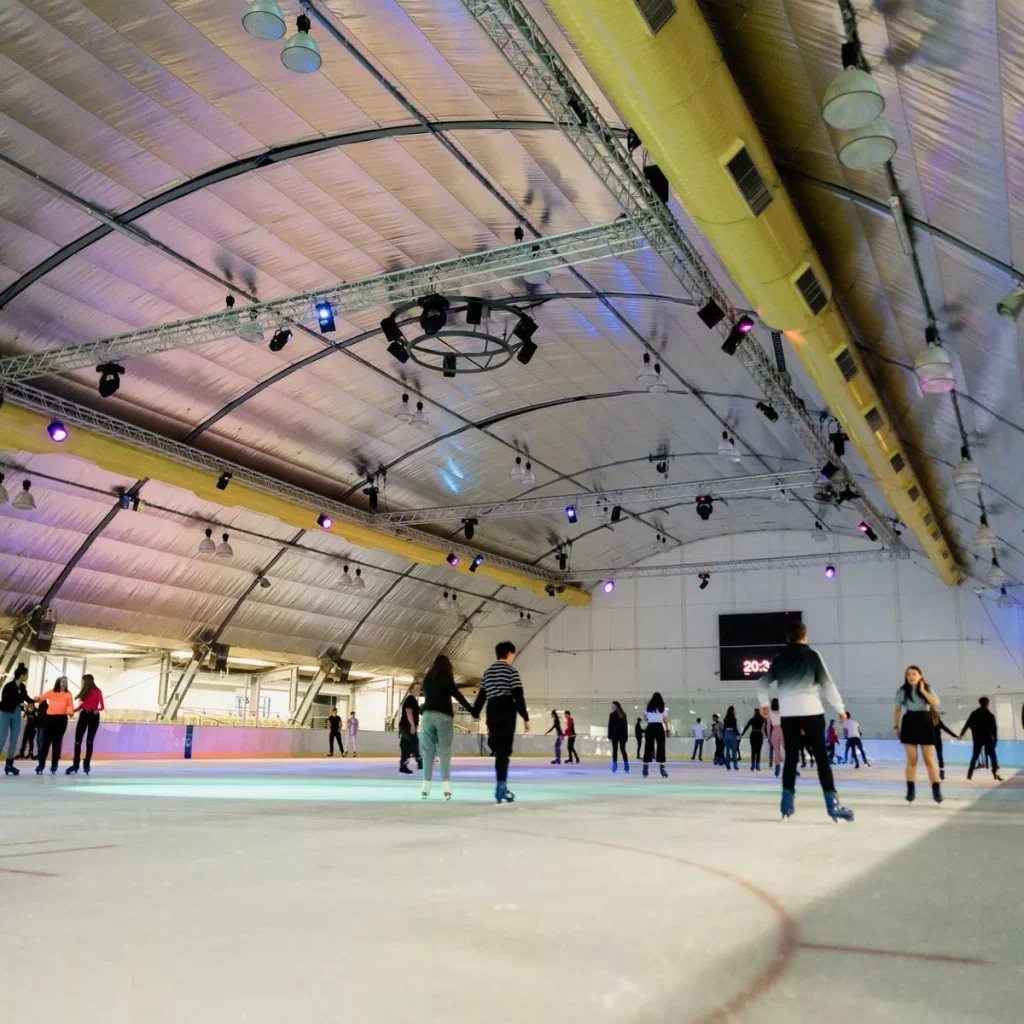
Our low-emissivity ceilings solve a major problem for ice rinks by stopping radiant heat that generates between the ice rink at low level and the roof at high level from warming the ice sheet. This reduces the strain on your refrigeration plant, leading to significant energy savings.
Reduces refrigeration energy consumption by up to 30%, with potential savings of up to 800,000 kWh per year for a full-size rink.
High Heat Reflection
Polished aluminium surface reflects up to 97% of radiant heat from the ceiling, lowering the ice heat load.
Lighting Efficiency
Increases light reflectivity, allowing a 25–30% reduction in fixtures while maintaining required lux levels.
Acoustic Performance Option
Lapendary acoustic low-e panels improve sound clarity and reduce echo, making arenas more versatile.
We’re trusted suppliers for
Low-E Ceilings
In ice rinks, the ceiling is the second-largest source of heat gain on the ice after air convection, accounting for around 28% of the total load. This is caused by radiant heat transfer from the warm ceiling to the cold ice surface.
Low Emissivity Ceilings reduce this effect by using polished aluminium sheets that reflect up to 97% of radiant energy back upward, lowering ice heat gain and improving energy efficiency.
Lapendary Panels combine low-e reflectivity with acoustic treatment, suspended above the ice in a loose catenary design. They reduce reverberation and sound intensity, improving speech clarity and music quality for multi-purpose arenas. Used in over 120 arenas worldwide, they provide both thermal and acoustic performance in a single installation.
Lighting produces both illumination and heat. High-reflectivity low-e ceilings reduce the number of fixtures needed by 25–30% while maintaining required lux levels, lowering both lighting and refrigeration loads. Spectators introduce additional heat into the arena, some of which is transferred as radiant heat to the rink; a low-e ceiling can help reduce this effect.
What is the purpose of a low-e ceiling in an ice rink?
A low-e (low emissivity) ceiling reduces radiant heat transfer from the warm ceiling to the cold ice surface, which accounts for about 28% of total ice heat gain. By reflecting up to 97% of radiant energy, it lowers the refrigeration load and improves energy efficiency.
How much energy can a low-e ceiling save?
A low-e ceiling can reduce refrigeration energy consumption by up to 30%, saving as much as 800,000 kWh per year in a full-size rink. This typically delivers a return on investment in under five years.
Does a low-e ceiling affect lighting requirements?
Yes. The high reflectivity of a low-e ceiling increases light distribution, allowing for 25–30% fewer fixtures while maintaining required lux levels. This reduces both lighting costs and additional heat load on the ice.
What are Lapendary acoustic low-e panels?
Lapendary panels combine low-e reflectivity with acoustic treatment. Suspended in a catenary design, they reduce reverberation and sound intensity, improving speech clarity and music quality. They are installed in over 120 arenas worldwide.
Can a low-e ceiling be used in refurbishment projects?
Low-e ceilings are suitable for both new builds and refurbishments, and can be installed over existing structures to improve thermal efficiency and reduce ongoing operating costs without major structural changes.
Speak To Us Today
Ready to bring your project to life? We’d love to hear about your plans and help make them happen. Simply fill out the form, and a member of our team will be in touch to discuss your project. There is no pressure, just helpful advice and a clear plan to get started.
Choosing Ice Tech UK means opting for excellence in a wide range of services, including temporary ice rinks, equipment sales, new builds, and refurbishments. Our design consultancy ensures that every installation meets your event’s unique requirements. With years of expertise, we guarantee that every rink we create is safe, durable, and an exhilarating experience for skaters.
We are also proud to offer our services for film works and special projects, transforming your vision into reality, no matter the location.
Planning your next project? Download our comprehensive product specification sheets to get the exact data, layouts, and requirements you need to get started.